Watching a parent’s health change or noticing the shifts in your own body as you age brings up a question a lot of families don’t ask soon enough: who’s actually managing this long-term? Not just the doctor you see when something goes wrong, but the one who knows your full history and catches problems before they become emergencies.
Las Vegas’s older adult population has grown significantly over the past decade, and with that growth comes a real gap: many seniors either don’t have a consistent provider, or they’re stuck waiting weeks for an appointment when a new symptom shows up.
This guide breaks down exactly what quality primary care in Las Vegas should look like for older adults from annual wellness visits to chronic disease management and how a flexible, same-day-friendly clinic model changes the equation for seniors and the family members who care for them.
Senior Healthcare Needs in Las Vegas
Aging changes what “routine care” actually means. A 35-year-old’s annual checkup and a 72-year-old’s annual checkup are not the same. the priorities, the risks, and the monitoring all shift.
Las Vegas’s senior population has unique medical needs shaped by this shift:
- More frequent monitoring of cardiovascular and metabolic health
- Closer tracking of medication interactions as prescription lists grow longer
- A need for proactive geriatric wellness, not just reactive treatment when something breaks
The old model where you only see a doctor once you’re already sick doesn’t serve older adults well. Preventative senior care catches gradual changes early, when they’re easiest to manage. That’s the philosophy behind Sahara West Urgent Care: an accessible medical home offering flexible primary care for seniors without the multi-week wait times so common across Las Vegas and Clark County.
The Importance of Routine Primary Care for Older Adults
A Consistent Provider Who Knows Your History
Health changes in older adults are often gradual: a slowly rising blood pressure reading, a small shift in weight, a medication that’s stopped working as well as it used to. These patterns are only visible to a provider who sees you regularly and has your history on record. Bouncing between different urgent care visits or walk-in clinics makes that kind of pattern-recognition nearly impossible.
Personalized Care for Age-Related Physiological Changes
The body’s needs evolve with age metabolism slows, bone density changes, and recovery from illness or injury takes longer. Patient-centered clinical care accounts for these realities instead of applying a one-size-fits-all treatment approach.
One Roof for Both Urgent and Long-Term Needs
Seniors and their caregivers shouldn’t have to guess which facility handles which problem. A clinic that bridges urgent medical needs and long-term health planning in a single location removes an entire layer of stress from an already complicated situation.
Pro tip for caregivers: If you’re managing care for an aging parent, establishing one consistent primary care provider rather than relying on whichever urgent care is closest when something comes up makes it dramatically easier to track medications, symptoms, and changes over time.
Essential Annual Wellness Visits and Physical Exams for Seniors
Comprehensive Physical Evaluations Tailored to Older Adults
A senior physical exam goes beyond the basics. It’s built around the specific risks that become more relevant with age cardiovascular strain, mobility changes, cognitive shifts, and medication burden.
Baseline Vital Monitoring
Annual visits establish a clear baseline for:
- Blood pressure
- Heart rate
- Metabolic health markers (blood sugar, cholesterol)
Without this baseline, it’s much harder for any provider, even a good one to know what “normal” looks like for you specifically, or to catch when something starts drifting.
Reviewing Lifestyle Factors and Emerging Limitations
A thorough wellness visit also covers day-to-day realities: mobility changes, fall risk, sleep quality, and any new physical limitations. These conversations often surface issues that wouldn’t come up otherwise and they’re a core part of genuine geriatric primary care.
Core Health Screenings and Diagnostic Testing for Older Patients
Cardiovascular Monitoring
High blood pressure and high cholesterol are two of the most common and most manageable risk factors for long-term cardiac problems. Routine monitoring is one of the highest-value things a senior can do for long-term health.
Metabolic & Endocrine Checks
Ongoing screening for diabetes and thyroid conditions is essential as metabolic changes become more common with age. Both conditions are highly manageable when caught early and much harder to manage when they go undetected for years.
On-Site Diagnostics
Skeletal concerns, joint pain, and internal complaints often require imaging to diagnose properly. In-house X-ray and ultrasound services mean seniors don’t have to travel to a separate imaging center or wait days for a referral appointment, a meaningful convenience for anyone dealing with mobility challenges.
Laboratory Testing
Routine blood work and specialized panels catch abnormalities anemia, kidney function changes, vitamin deficiencies long before they become symptomatic. This is one of the clearest examples of prevention outperforming reaction.
Chronic Disease Management for Seniors
Many seniors are managing more than one condition at once, and that complexity requires coordinated, ongoing care not isolated, one-off treatment.
Blood Sugar Regulation
Ongoing diabetes management for older adults includes regular monitoring, medication adjustments, and lifestyle guidance tailored to changing activity levels and metabolism.
Long-Term Hypertension Management
Blood pressure management in seniors isn’t a one-time prescription; it’s continuous tracking and adjustment as cardiovascular risk factors shift over time.
Coordinating Secondary Conditions
Conditions like asthma, allergies, and joint or muscle discomfort often coexist with primary chronic conditions. Coordinated care means these aren’t treated in isolation, but as part of the full health picture.
Mistake to avoid: Treating each condition with a different, disconnected provider often leads to conflicting medications or duplicated tests. A single primary care team managing the full picture reduces that risk significantly.
Medication Management and Safety in Aging
This is one of the most overlooked and most important parts of senior healthcare.
Comprehensive Prescription Reviews
As prescription lists grow, so does the risk of overlap, redundancy, or medications that are no longer necessary. Regular reviews evaluate whether each medication is still effective and still needed.
Monitoring Drug Interactions
Drug interaction monitoring becomes increasingly important as the number of prescriptions increases. A provider who reviews the full medication list, not just the one prescription being renewed, is far more likely to catch a dangerous interaction before it causes harm.
Safe Dosage Guidance
Providers also help patients and caregivers understand safe dosage schedules and how to recognize early signs of adverse side effects, which often look different in older adults than in younger patients.
Preventive Care, Immunizations, and Lifestyle Guidance
Age-Appropriate Preventive Screenings
Preventive care recommendations shift with age; certain screenings become more important, and their frequency often increases. Staying current on these recommendations is one of the simplest ways to stay ahead of emerging risks.
Nutrition, Activity, and Wellness Counseling
Guidance here is tailored specifically to senior mobility and vitality not generic fitness advice, but practical, realistic recommendations that account for physical limitations and quality of life.
Targeted Injections and Preventative Therapies
This can include B12 support and other routine preventative therapies that help address common age-related deficiencies and support overall energy and vitality.
Navigating Primary Care vs. Urgent Care for Seniors
One of the most common points of confusion for seniors and caregivers is knowing which type of visit fits which situation.
| Situation | Where to Go |
| Annual wellness exam | Primary Care |
| Routine chronic condition monitoring | Primary Care |
| Medication adjustments | Primary Care |
| Sudden minor injury (fall, sprain) | Urgent Care |
| Acute infection | Urgent Care |
| Unexpected symptom flare-up | Urgent Care |
The real value of a dual-service clinic is that seniors and caregivers don’t have to make a perfect decision at the moment. Whether it’s a scheduled wellness exam or a same-day concern, both primary care and urgent care in Las Vegas are handled by the same familiar team, at the same location.
What Seniors and Caregivers Can Expect During a First Visit
Getting started is more straightforward than most families expect. Here’s what the process looks like:
- Detailed discussion of health history and current concerns, a full conversation about medical history, current medications, and any concerns you or your caregiver want to address.
- Thorough physical and clinical evaluation a comprehensive assessment appropriate to age and health status.
- Recommendations for diagnostic tests or screenings labs, X-ray, or ultrasound, available on-site when needed.
- A personalized, long-term health roadmap is a plan built around your specific risk factors, conditions, and goals, not a generic template.
Appointment Day Checklist
- Photo ID
- Insurance details
- A current medication list (including dosages)
- Prior medical records, if available
Caregivers accompanying a senior to their first visit should bring this same information; it makes the appointment significantly more productive for everyone involved.
Accessing Trusted Senior Care in Las Vegas
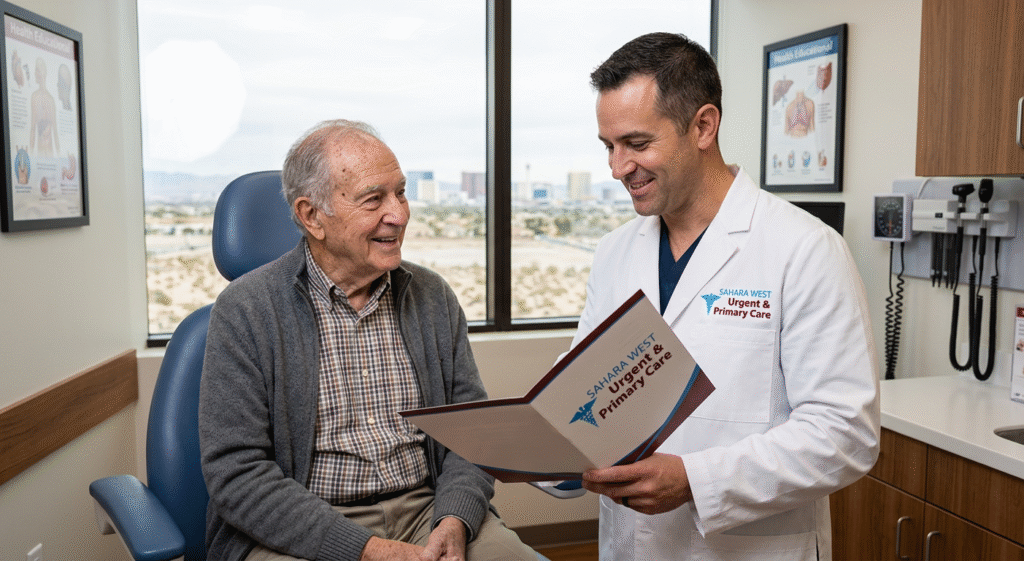
Aging well isn’t about avoiding every health issue, it’s about having a provider who catches problems early, manages complexity with care, and actually listens. That’s the standard Dr. Mouchir Harb, MD, and the team at Sahara West Urgent Care hold themselves to: genuine human connection, clear communication, and a real long-term plan for every patient who walks through the door.
Key takeaways:
- Seniors benefit most from consistent, proactive primary care not just reactive treatment
- Chronic conditions are far easier to manage with coordinated, ongoing monitoring
- Medication safety reviews become more critical as prescription lists grow
- A dual-service clinic removes the guesswork between routine and urgent needs
📍 6125 West Sahara Avenue, Las Vegas, NV 89146
📞 Call today, or use the online booking portal to schedule.
Don’t wait for a health scare to establish care. Schedule a senior primary care visit with Sahara West Urgent Care today and give yourself or the parent you’re caring for a real, long-term health plan.
Frequently Asked Questions (FAQs)
- How often should seniors have a primary care checkup?
Most seniors benefit from an annual wellness visit at minimum, with more frequent visits if managing chronic conditions like diabetes or hypertension. Your provider can recommend a schedule based on your specific health history. - What’s included in a senior wellness exam?
A senior wellness exam typically includes blood pressure and heart rate monitoring, metabolic health screening, a review of current medications, and a discussion of lifestyle factors, mobility, and any new physical limitations. - When should a senior go to urgent care instead of primary care?
Urgent care is appropriate for sudden minor injuries, acute infections, or unexpected symptom flare-ups that need same-day attention. Primary care handles routine monitoring, chronic condition management, and scheduled wellness exams. - How does medication management work for older adults with multiple prescriptions?
Providers conduct regular prescription reviews to check for drug interactions, confirm each medication is still necessary and effective, and adjust dosages as health needs change over time. - Can seniors get X-rays or lab work done during a regular visit?
Yes, at clinics offering on-site diagnostics, X-rays, ultrasounds, and lab testing can typically be completed during the same visit, avoiding the need for a separate referral appointment. - What should a caregiver bring to a senior’s first primary care appointment?
Bring a photo ID, insurance information, a full list of current medications with dosages, and any prior medical records available. This helps the provider build an accurate, complete picture from the very first visit. - Is same-day care available for seniors in Las Vegas?
Yes. Clinics with a hybrid primary care and urgent care model, like Sahara West Urgent Care, offer same-day appointments and walk-in flexibility, which is especially valuable for seniors who need timely attention without a long wait.