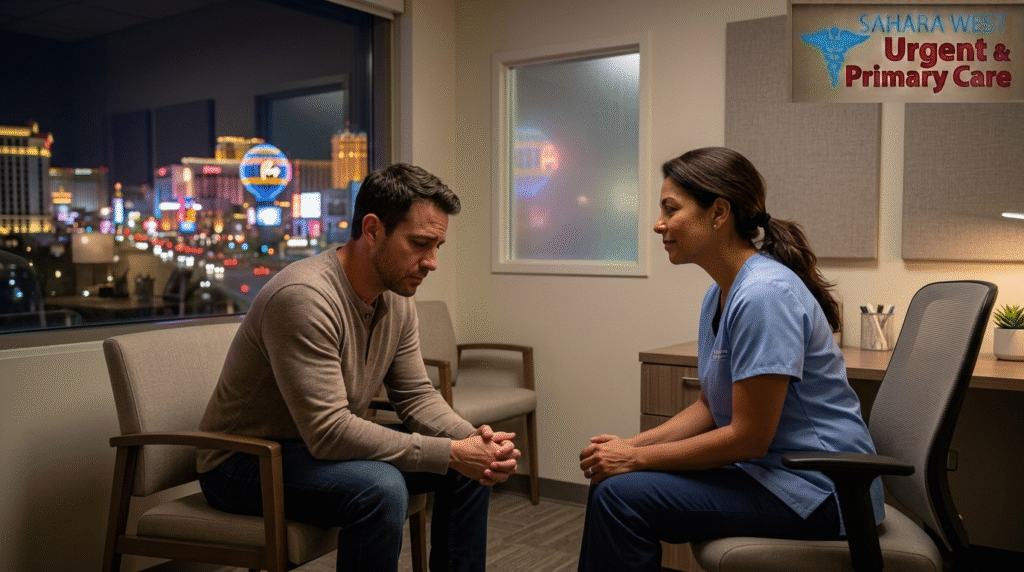
In Las Vegas, a drink is never more than a few steps away from the casino floor, the convention hall, the pool deck, or the corner store that never closes. That’s part of what makes this city so much fun. It’s also exactly what makes it so easy to miss the line between “unwinding” and “unraveling.”
If you’ve ever wondered whether your drinking has quietly shifted from social to something heavier, you’re not alone and you’re asking the right question at the right time.
Alcohol and mental health are deeply intertwined, often in a cycle that feeds itself: stress leads to drinking, drinking worsens anxiety and mood, and that worsened mental state leads back to more drinking. This guide breaks down exactly how that cycle works, what Las Vegas’s unique culture adds to the equation, and most importantly how to recognize the warning signs that mean it’s time for professional medical evaluation, not just willpower.
The Bi-Directional Link: Alcohol and Mental Health
How Alcohol Chemically Impacts Your Brain
Alcohol directly affects three key neurotransmitters:
- GABA alcohol enhances this calming neurotransmitter, producing the relaxed, sedated feeling of early intoxication
- Serotonin briefly boosted, contributing to temporary mood lift
- Dopamine spikes with drinking, reinforcing the reward cycle that drives repeated use
The problem is that none of these effects last. Your brain works to rebalance itself, and when it does, it often overcorrects.
The Rebound Effect: Why Alcohol Makes Things Worse Later
This is one of the most misunderstood parts of drinking and mental health. Alcohol may relieve anxiety or low mood in the moment, but as it leaves your system, GABA activity drops and stress hormones rise often producing next-day anxiety, irritability, or a depressive dip that’s worse than what you started with.
This is sometimes called “hangxiety,” and it’s not a coincidence it’s a predictable neurochemical rebound.
Self-Medicating Unmanaged Stress, Isolation, Trauma, or Grief
Alcohol is one of the most common and most socially accepted ways people attempt to self-medicate:
- Chronic work stress
- Social isolation or loneliness
- Unresolved trauma
- Grief after a loss or major life change
The relief feels real in the short term, which is exactly why the pattern is so easy to fall into and so hard to recognize from the inside.
Dual Diagnosis: When Mental Health and Alcohol Use Disorder Co-Occur
When alcohol use and a mental health condition like anxiety, depression, or PTSD occur together and reinforce each other, it’s clinically classified as a dual diagnosis. Treating only one half of this equation rarely works; both need to be addressed together for lasting recovery.
The Unique Environment of Las Vegas and Drinking Culture
The Omnipresence of Alcohol in Daily Life
Casinos serve free drinks to keep you at the table. Conventions wrap networking around open bars. Pool parties run all day. Grocery and convenience stores sell alcohol around the clock. In Las Vegas, avoiding alcohol takes deliberate effort because the default environment pushes the opposite direction.
High-Stress Industries and Normalized Drinking
Hospitality, entertainment, and service-industry workers face high-pressure, customer-facing shifts often at night where “having a drink after a shift” becomes an unquestioned ritual rather than an occasional choice.
The Illusion of High-Functioning Alcoholism
One of the most dangerous myths in a fast-paced city like Las Vegas is the idea that if you can still work, pay bills, and show up to obligations, your drinking “isn’t a problem.” High-functioning alcohol use disorder is real, and it often goes unaddressed for years precisely because it doesn’t look like the stereotype.
Social Pressures Unique to Clark County Residents
Living in a city built around nightlife and hospitality means near-constant exposure to social settings where drinking is the default activity making it harder to set boundaries without feeling like an outlier.
Recognizing the Warning Signs: When Drinking Affects Well-Being
Behavioral Red Flags
- Using alcohol specifically to fall asleep
- Hiding or minimizing how much you actually drink
- Feeling guilt or shame after drinking, but continuing the pattern anyway
Psychological Warning Signs
- Escalating anxiety, even outside of drinking occasions
- Unprovoked panic attacks
- Depressive dips that seem to deepen over time
- Increased irritability specifically when sober
Physical Indicators
- Chronic fatigue that doesn’t improve with rest
- Disrupted sleep architecture alcohol suppresses REM sleep, leaving you unrested even after a full night
- Gastrointestinal distress
- Signs of liver strain (fatigue, abdominal discomfort, changes in skin or eye color)
Social and Occupational Impact
- Increasing friction in relationships tied to drinking
- Missed work obligations or declining performance
- Withdrawing from activities that don’t involve alcohol
Expert tip: A simple, honest self-check could you comfortably go two weeks without a drink, without irritability, cravings, or rearranging your schedule around it? If the answer is genuinely no, that’s worth exploring with a professional.
Physical and Medical Complications of Heavy Drinking
Acute Risks
- Alcohol poisoning
- Severe dehydration
- Electrolyte imbalances
- Accidental injuries from impaired judgment or coordination
Cardiovascular Impact
- Elevated blood pressure
- Arrhythmias sometimes called “holiday heart syndrome” when triggered by binge drinking episodes
- Increased long-term stroke risk
Neurological and Cognitive Effects
- Brain fog and difficulty concentrating
- Memory lapses, including blackouts
- Impaired emotional regulation, making mood swings more frequent and intense
The Danger of Sudden Withdrawal
This is critical: stopping heavy, long-term alcohol use abruptly can be medically dangerous. Severe withdrawal can involve seizures and a life-threatening condition called delirium tremens (DTs). This is not something to manage alone at home it requires medical supervision.
If you or someone you know is experiencing confusion, seizures, hallucinations, or severe shaking after stopping drinking, this is a medical emergency. Call 911 or go to the nearest emergency room immediately.
When to Seek Medical and Urgent Care Intervention
Medical Emergencies vs. Chronic Management Needs
Not every alcohol-related concern requires an ER visit but knowing the difference matters, and it can be the difference between a manageable evening and a dangerous one.
Urgent Walk-In Care for Acute Crises
If you’re experiencing mild-to-moderate withdrawal symptoms, acute panic attacks, physical exhaustion, or emotional destabilization tied to alcohol use, a mental health urgent care clinic offers same-day medical evaluation without the ER wait.
Sahara West Urgent Care provides exactly this kind of acute episodic care model in Las Vegas. Their multidisciplinary team including board-certified psychiatrists, licensed psychologists, and counselors can evaluate physical symptoms (elevated blood pressure, dehydration, exhaustion) alongside the emotional and psychiatric picture, then connect you with appropriate next steps for ongoing care.
Soft CTA: If alcohol use has started affecting your sleep, mood, or physical health, an honest, judgment-free evaluation is available today. Visit Sahara West’s Mental Health page or call (702) 248-0554 to speak with their care team.
Emergency Room Directives
Go to the ER do not wait for urgent care or an outpatient appointment if you or someone else is experiencing:
- Signs of severe withdrawal (seizures, hallucinations, confusion)
- Suspected alcohol overdose
- Active suicidal ideation
If you are having thoughts of suicide, call or text 988 (Suicide & Crisis Lifeline) immediately, or go to your nearest emergency room.
Connecting to Long-Term Care
Acute stabilization is only the first step. From there, patients benefit from being connected to outpatient addiction medicine, psychiatry, and counseling networks across Las Vegas for sustained recovery rather than treating a single crisis in isolation.
Navigating Treatment, Harm Reduction, and Recovery Resources
Assessing Readiness for Change
Recovery isn’t one-size-fits-all. Some people benefit from a structured reduction plan; others need full abstinence supported by medical detox. A licensed provider can help assess which path fits your specific situation.
Local Medical Detoxification and Residential Treatment
Nevada offers medical detoxification facilities and residential treatment programs designed specifically to manage withdrawal safely under professional supervision a critical option for anyone with a history of heavy, prolonged drinking.
Peer Support Groups
Las Vegas residents have access to multiple peer support pathways, including:
- Alcoholics Anonymous (AA) the traditional 12-step model
- SMART Recovery a non-12-step, evidence-based alternative
- Other peer-led community support groups across Clark County
The Role of Primary and Urgent Care Providers
You don’t need to have “hit rock bottom” to talk to a medical provider about your drinking. Primary care and urgent care providers can offer judgment-free guidance, screen for related health complications, and refer you to appropriate specialists often as a first, low-pressure step.
Mistake to avoid: Waiting until a crisis forces the conversation. Bringing up alcohol use proactively with a provider even if you’re unsure it’s “bad enough” often leads to earlier, easier intervention.
Final Thoughts: Awareness Is the First Step Toward Getting Better
Las Vegas’s culture makes it easy to drink and easy to overlook when drinking has stopped being fun and started being a coping mechanism. The good news is that recognizing the pattern really recognizing it is often the hardest part. Everything after that is a series of manageable next steps.
The key takeaway: if alcohol use is affecting your sleep, mood, relationships, or physical health, that’s your signal to seek a judgment-free medical evaluation not a reason for shame.
If you’re noticing physical or emotional warning signs tied to your drinking, you don’t have to figure this out alone. Reach out to Sahara West Urgent Care’s Mental Health team or call (702) 248-0554 for compassionate, confidential, same-day support because the sooner you address it, the easier it is to turn around.
Frequently Asked Questions
How can I tell if my drinking is a coping mechanism or a clinical problem?
If you’re using alcohol specifically to manage stress, anxiety, or sleep, feel unable to comfortably stop for an extended period, or experience guilt around your drinking but continue the pattern, these are signs it may have crossed from occasional coping into a clinical concern worth professional evaluation.
Why does alcohol make anxiety and depression worse the next day?
As alcohol leaves your system, it triggers a neurochemical rebound GABA activity drops and stress hormones rise which commonly produces heightened anxiety, irritability, or low mood the day after drinking, a pattern often called “hangxiety.”
Can heavy alcohol use cause physical chest pain and sleep disorders?
Yes. Heavy alcohol use can cause cardiac arrhythmias (sometimes called “holiday heart syndrome”), elevated blood pressure, and significantly disrupted sleep architecture due to REM suppression, all of which can produce chest discomfort and poor-quality sleep.
When should I visit an urgent care clinic for alcohol-related anxiety or physical symptoms instead of waiting for a therapist?
Visit urgent care the same day if you’re experiencing acute panic attacks, physical exhaustion, elevated blood pressure, or emotional destabilization related to alcohol use these require prompt evaluation rather than waiting weeks for a scheduled therapy appointment.
What same-day medical support options are available in Las Vegas for individuals dealing with substance-related crises?
Same-day options include walk-in mental health urgent care clinics for evaluation of acute physical and emotional symptoms, emergency rooms for severe withdrawal or overdose, and the 988 Suicide & Crisis Lifeline for mental health emergencies.